
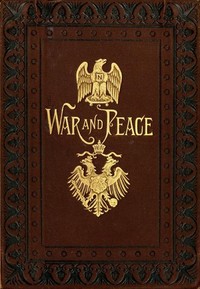
La guerre et la paix, Tome III by graf Leo Tolstoy
If you're picking up Volume III, you're already in deep with Tolstoy's Russian epic. The social whirl of Petersburg and Moscow is over. Napoleon's Grande Armée has crossed the border, and the war is no longer a distant rumor—it's a firestorm consuming the country.
The Story
We follow our familiar faces into the heart of the conflict. Pierre Bezukhov, disillusioned with his empty life, decides to witness the Battle of Borodino firsthand, a decision that plunges him into sheer terror and a strange new clarity. Natasha Rostova, reeling from her broken engagement, throws herself into nursing the wounded as Moscow is evacuated and then set ablaze. Her youthful spark is tempered by real suffering. For Prince Andrei Bolkonsky, Borodino brings a long-awaited confrontation with both his enemy and his own past. Meanwhile, the historical figures—Napoleon and Kutuzov—clash not just in battle, but in Tolstoy's fascinating argument about how little control any one person actually has over history's tide.
Why You Should Read It
This is where the novel earns its title. The 'peace' of the characters' lives is utterly shattered by 'war,' and Tolstoy shows us the transformation in stunning, intimate detail. He has a gift for zooming in on a single, telling moment—a soldier's joke before a charge, the quiet in a field hospital—that tells you more about the human condition than any general's speech. His famous digressions on history feel urgent here, not academic. He's arguing that history isn't made by great men giving orders, but by the combined actions of countless ordinary people, a concept that feels incredibly modern. Reading this volume, you don't just learn about 1812; you feel the dirt, the panic, and the fleeting moments of grace.
Final Verdict
This isn't a standalone book—it's the powerful, necessary climax of a journey. It's perfect for anyone who has invested in the first two volumes and wants to see these characters tested in the crucible. It's also for readers who think they don't like 'war stories,' because Tolstoy is far less interested in glory than in truth. Be prepared: it's darker and more philosophically challenging than what came before, but it's also the most gripping and emotionally rewarding part of the saga. Keep the tissues handy.
There are no legal restrictions on this material. Knowledge should be free and accessible.



Donna Taylor
11 months agoHonestly, it provides a comprehensive overview perfect for everyone. I would gladly recommend this title.