
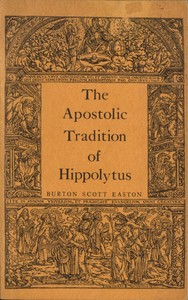
The Apostolic Tradition of Hippolytus by Antipope Hippolytus
Let's get this out of the way first: this isn't a novel. There's no plot in the traditional sense. Instead, 'The Apostolic Tradition' is a snapshot. Imagine you could time-travel to a Christian house-church in early 3rd-century Rome. This book is what you'd find the leaders using. It's a manual, a set of rules and prayers meant to keep everything running smoothly and consistently.
The Story
The 'story' is the life of the young church. Hippolytus lays out, step-by-step, how to do almost everything. He details the long, intense process of becoming a Christian—a multi-year journey of learning and testing. He gives the exact words to say when ordaining a bishop, a priest, or a deacon. He prescribes prayers for mealtimes, for bedtime, and for when you first wake up. He even includes instructions for tradespeople, warning about jobs Christians shouldn't take (like making idols or being a magician). It's the complete, everyday blueprint for a community trying to survive and define itself in a pagan empire.
Why You Should Read It
You read this for the stunning intimacy. It bridges a huge gap between the New Testament and the later, more formalized church. Here, the faith feels raw, immediate, and deeply communal. You see the roots of rituals still practiced today. But the most compelling layer is the author himself. Hippolytus was a rigid conservative who fought with the popes of his day and ultimately led a breakaway group. He was, officially, on the 'wrong' side of history. Yet, his manual was so useful that it was copied and adapted for centuries, its influence spreading across the ancient world. Reading it, you're constantly aware of this tension: the work of a rebel became a cornerstone of tradition. That irony is more gripping than any fiction.
Final Verdict
This is a book for the curious. It's perfect for history buffs who want to move beyond kings and battles to the texture of daily life, or for anyone interested in church history who's tired of reading about the early church and wants to read something from it. It’s also great for writers or world-builders looking for inspiration on how real communities organize themselves. If you approach it not as a dry text but as a recovered artifact—a set of living, breathing rules from a distant world—you'll find it absolutely captivating.
This digital edition is based on a public domain text. Distribute this work to help spread literacy.
Aiden Wright
2 years agoI have to admit, the pacing is just right, keeping you engaged. A valuable addition to my collection.
Anthony Taylor
2 years agoSimply put, the character development leaves a lasting impact. I will read more from this author.






Karen Moore
1 year agoI had low expectations initially, however it challenges the reader's perspective in an intellectual way. I couldn't put it down.