
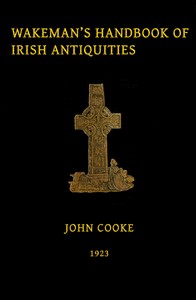
Wakeman's handbook of Irish antiquities by W. F. Wakeman
Don't let the word 'handbook' fool you. This book isn't a sterile catalog. It's the field notebook of William Frederick Wakeman, a man who spent decades sketching, measuring, and exploring Ireland's ancient sites. Published in the 1840s, it was one of the first practical guides meant for everyday people—travelers, curious locals, and budding historians—to identify and understand the ruins they encountered.
The Story
There's no traditional plot, but there is a clear mission: Wakeman wants to equip you with knowledge. He systematically walks you through different types of antiquities. One chapter teaches you the difference between a Celtic cross and a later medieval one. Another explains how to identify a ringfort (a defended farmstead) versus a ceremonial enclosure. He describes early Christian monasteries, Ogham stones (Ireland's earliest writing), and prehistoric tombs, often sharing his own observations from visits. The 'story' is the slow revelation of a layered landscape, where every generation left its mark, and Wakeman provides the legend to the map.
Why You Should Read It
The magic here is the shift in perspective it creates. Before reading, a pile of stones is just a pile of stones. Afterward, it could be the collapsed wall of a 9th-century monk's cell. Wakeman's passion is contagious. He writes not as a distant scholar, but as a fellow enthusiast saying, 'Look at this amazing thing I found, and here's what I think it means.' His background as an artist means the descriptions are vivid, and the book is illustrated with his own clear, detailed drawings. You get a real sense of the excitement of early archaeology, where much was still being discovered and understood.
Final Verdict
This is the perfect book for anyone with a budding interest in Irish history who plans to visit, or even for an armchair traveler with imagination. It's for the person who drives past a ruined castle and wants to know more than just its name. While some details are outdated based on modern archaeology, that's part of its charm—it's a snapshot of 19th-century understanding. Pair it with a modern guidebook for the full picture. If you want to feel like you're on a historical treasure hunt with a knowledgeable and passionate guide, Wakeman's handbook is your essential companion.
This work has been identified as being free of known copyright restrictions. Enjoy reading and sharing without restrictions.
Christopher Smith
1 year agoHaving read this twice, the flow of the text seems very fluid. Exactly what I needed.
John Johnson
10 months agoSolid story.
Sarah Scott
1 year agoJust what I was looking for.





Logan Garcia
1 year agoThe fonts used are very comfortable for long reading sessions.