1

Injuneered — Background and Themes
(0 User reviews)
291
Project Gutenberg
2025
Not confirmed
Indians of North America -- Fiction; Western stories; Circus -- Fiction; Simpkins, Magpie (Fictitious character) -- Fiction; Piperock (Montana : Imaginary place) -- Fiction
Readers of public-domain and historical texts
Project Gutenberg digital edition
en
Edition facts
Words
14,564
Reading time
64 min
Text sections
2
The catalog record for Injuneered — Background and Themes provides practical reading context through 14,564 words, 1 hr 4 min estimated reading time, and 2 detected text sections.
The text analysis averages about 14.3 words per sentence, while the detected sections provide another way to judge how the source is divided.
Project Gutenberg metadata also associates the work with “Indians of North America -- Fiction,” connecting these edition facts with the source record’s subject description.
Source:
Project Gutenberg record #76207
In W. C. Tuttle's 'Injuneered,' the Piperock narrator Ike Harper recounts a circus takeover by Runnin' Wolf, a six-foot-six Indian with a talent for exaggerated lineage claims. The story's humor hinges on the contrast between the narrator's folksy, understated voice and the absurd events—an elephant chase, a stuttering rider, and a legal dispute over a traveling show.
Read the complete public-domain text at its original source.
Read on Project GutenbergThe narrator of 'Injuneered,' Ike Harper, establishes his voice immediately with a laconic, knowing tone: 'Me and Dirty Shirt Jones are settin’ on the hitch rack in front of Buck Masterson’s saloon one mornin’, like a couple old buzzards, lookin’ for something to happen.' This opening places the reader in Piperock, a town where the mundane—electing a Democrat President—is interrupted by the arrival of a circus elephant. Tuttle’s diction is deliberately colloquial, with contractions and regionalisms ('jist,' 'knowed,' 'shore') that ground the story in a specific oral tradition. The humor arises from deadpan delivery: Runnin’ Wolf’s claim to be the son of Sitting Bull, Chief Joseph, and Pontiac, depending on his alcohol intake, is presented as fact. The narrative voice never breaks character, treating the absurd with straight-faced sincerity.
The Narrator’s Colloquial Diction
Ike Harper’s narration is the story’s engine. Tuttle writes in a first-person vernacular that avoids literary polish: 'I’ve knowed him to mourn a heap over the death of his sister, Pocahontas.' The grammar is deliberately nonstandard—'knowed' for 'known,' 'heap' for 'much'—and the syntax is loose, mimicking spoken yarns. This choice creates intimacy and authenticity, as if the reader is sitting on that hitch rack. The narrator’s understatement amplifies the comedy: when Scenery, the stuttering rider, claims he fell off an elephant five times, Ike reports it without editorializing. The effect is a dry, observational humor that trusts the reader to catch the absurdity.
Character Description Through Exaggeration
Tuttle introduces Runnin’ Wolf with a cascade of hyperbole: 'six feet six inches tall, and if it wasn’t for the size of his nose he could dive out of sight in a shotgun barrel.' The description is not merely physical but behavioral—his lineage shifts with each drink. Dirty Shirt Jones is defined by his 'cockeyed expression,' his left eye 'darts hither and yon, finally comin’ to rest in the northwest section of his eye socket.' These caricatures are vivid and memorable, built from a few precise details. The author avoids psychological depth, instead relying on external traits and actions that reveal character: Runnin’ Wolf’s scheming for alcohol and poker money, Dirty Shirt’s legal claim on half the circus.
Dialogue as Comic Engine
Dialogue in 'Injuneered' drives both plot and humor. The stuttering rider Scenery delivers lines like 'Fuf-fuf-five tut-tut-times. And every tut-time that dud-damn’ elephant pup-put me back,' where the stammer is rendered phonetically for comic effect. The exchange between Tombstone Todd and Dirty Shirt over ownership of the circus is a rapid-fire volley of threats and counterclaims: 'Your what?' roars Yuma. 'Say that agin, feller.' Tuttle uses dialect markers—'gittum,' 'thasso,' 'animiles'—to distinguish characters. The dialogue is functional, advancing the conflict while showcasing each speaker’s personality: Tombstone’s bluster, Dirty Shirt’s cunning, Ike’s laconic commentary.
Setting as a Source of Humor
Piperock, Montana, is a fictional town that Tuttle populates with eccentric characters and improbable events. The setting is established through small details: the hitch rack, Buck Masterson’s saloon, the livery stable. The humor often derives from the collision of the mundane with the extraordinary—an elephant chasing a hay wagon through town, or a legal dispute over a circus conducted on a sidewalk. The narrator’s casual tone normalizes the chaos: 'It was worth a lot to see them four sinners from Yaller Horse... runnin’ and swearin’.' The town’s isolation amplifies the comedy; these are people with time on their hands, ready to be entertained by any disruption.
Readers should pay attention to how Tuttle balances the absurd premise—a circus owned by a drunken Indian—with the narrator’s deadpan delivery. The story’s humor depends on the gap between what happens and how it is reported. The excerpts suggest a tightly plotted farce, but the full text may reveal whether the resolution matches the setup. Approach the story as a performance of voice, where the pleasure lies in the telling as much as the tale.
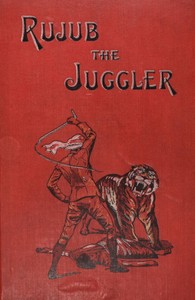
Reading how Ike Harper tells Runnin' Wolf's elephant chase with such dry, gentle wit, I found myself thinking of another old story’s quieter magic. There’s a similar warmth in watching a stranger upend a whole town, though the mood shifts from laughter to something more wistful. That book, Rujub, the Juggler — Themes and Context, lingers in my mind like a half-remembered shade.
There are no reviews for this eBook.
There are no comments for this eBook.
Reader reflection
What was your reading experience?
Capture what you thought, learned, and would like to remember.
Your progress
0
/
10
2
Was reading this book enjoyable?
3
Would you recommend this book to another reader?
4
How easy was the book to follow?
5
Was the book moving at the right speed?
6
Would you start a conversation about this book?
7
Did you relate to its people, ideas, or situations?
8
How would you rate its originality?
9
What is the main idea you are taking away?
10