1

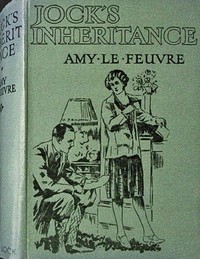
Jock's inheritance — Background and Themes
(0 User reviews)
363
Project Gutenberg
2025
Not confirmed
Country life -- England -- Fiction; Inheritance and succession -- Fiction; Love stories; Aunts -- Fiction; Nieces -- Fiction; Sisters-in-law -- Fiction
Readers of public-domain and historical texts
Project Gutenberg digital edition
en
Edition facts
Words
58,843
Reading time
256 min
Text sections
6
Before opening Jock's inheritance — Background and Themes, the edition data offers a quick orientation: 58,843 words, 4 hr 16 min estimated reading time, and 6 detected text sections.
The text analysis averages about 12.9 words per sentence, while the detected sections provide another way to judge how the source is divided.
Project Gutenberg metadata also associates the work with “Country life -- England -- Fiction,” connecting these edition facts with the source record’s subject description.
Source:
Project Gutenberg record #76969
Amy Le Feuvre's 1927 novel uses brisk dialogue and sensory description to trace Orris's struggle to protect her niece Pippa and a beloved library after a family financial collapse. The excerpts reveal a narrative voice that balances wry Scottish-inflected speech with tense, action-driven scenes of fire and rescue.
Read the complete public-domain text at its original source.
Read on Project GutenbergAmy Le Feuvre opens Jock's Inheritance with a room described as “cosy and comfortable,” yet the first line of dialogue—a man’s cool remark, “Calamity seems to be her portion”—immediately signals the instability beneath domestic surfaces. The narrative voice moves between brisk, idiomatic speech (the Scottish “dour,” the clipped “That’s off”) and sensory detail: a bitter north-east wind, a blazing fire, a girl listening for the electric bell. This interplay of comfort and crisis, of spoken bluntness and unspoken worry, establishes a pattern that recurs throughout the excerpts.
Dialogue as a Tool of Character and Pace
Le Feuvre’s dialogue does more than advance plot; it reveals temperament and social dynamics in a few words. When Dugald enters, his “Yes, it’s myself” and “don’t look so ‘dour’” immediately establish a familiar, slightly teasing tone. Orris’s sister Venetia’s letter is a monologue of self-justification and bad news, its breathless syntax (“The oil has failed, and the company, which I rather gather is Frank himself, is insolvent”) conveying both panic and a habit of leaning on Orris. Later, during the fire, Jock’s commands—“No, you don’t!” and “If you promise to behave yourself, I’ll go and help”—are short, physical, and imperative, contrasting with Orris’s frantic, book-focused cries. The author uses these vocal shifts to mark changes in power and urgency without explanatory narration.
The Physicality of Crisis: Burns, Blankets, and Iron Grips
Le Feuvre renders the fire scene through tactile, almost visceral details. Orris “enveloped herself in a blanket” and dashed in “in spite of smoke and heat”; her hands are “badly burned,” and she faints from “the shock and the burns.” Jock catches her “up in his arms, as if she were a baby” and later holds her “in an iron grip.” These physical actions—grabbing, carrying, holding—are the primary means of conveying emotion. The author avoids interior monologue; instead, the reader infers Orris’s desperation from her repeated, reckless entries into the burning library, and Jock’s concern from his decisive, forceful restraint. The body, not the mind, carries the narrative weight in this passage.
Setting as a Marker of Class and Vulnerability
The excerpts move from a London flat to a country house with a library, a farm, and fields. Each setting carries social and economic implications. The flat is “cosy” but its electric bell and trim maid suggest modest gentility. The country house, Pinestones, contains a “precious library” that Orris values above her own safety—a detail that hints at her attachment to intellectual or inherited worth. The farm and market day introduce a working rural rhythm. Le Feuvre uses setting to underscore vulnerability: the flat is a rented space, the country house is threatened by fire, and the fields are muddy and windy. No setting is stable; each is subject to weather, accident, or financial reversal, mirroring the characters’ precarious positions.
Narrative Economy in Action Sequences
Le Feuvre compresses time and action with short, declarative sentences and a focus on external events. The fire is described in a series of rapid, almost journalistic clauses: “The fire-engine had been sent for, but had not yet arrived”; “Again she dashed in”; “Three times she ventured in.” The author does not linger on Orris’s thoughts; instead, the reader watches her movements. The arrival of the fire-engine is undercut by “a tremendous lot of talking” before work begins, a wry observation that slows the pace just enough to heighten frustration. This technique—alternating swift action with small, realistic delays—creates a rhythm that feels both urgent and grounded, avoiding melodrama while maintaining tension.
Readers will find that Le Feuvre’s control of dialogue and physical detail rewards attention to what is said and done rather than to what is felt. The excerpts offer no interior monologue; character is revealed through speech, gesture, and reaction to crisis. This restraint gives the novel a brisk, almost theatrical quality, where every line and action carries weight. Approach the text as a series of scenes built from concrete choices—a hand burned, a blanket grabbed, a door opened—and the emotional landscape will emerge from the spaces between them.
Sometimes a book lingers like the smell of rain on old cloth—so it is with Le Feuvre’s firelit loyalties, where a rescued shelf matters as much as a rescued child. I find that same quiet stubbornness in the shadows of Tales of Chinatown — Reading Companion, where secrets are kept, not for drama, but for love. Both feel like confidences shared over weak tea.
There are no reviews for this eBook.
There are no comments for this eBook.
Reader reflection
Record your reading impressions
A brief reflection can help important ideas stay with you longer.
Your progress
0
/
10
2
What was your overall reaction to the book?
3
Is this a title you would suggest to others?
4
Did the language feel accessible?
5
Did this book create an emotional response?
6
How distinctive were its ideas or approach?
7
How clear did the writing feel?
8
What did you think about the pace?
9
What did this book teach you most?
10