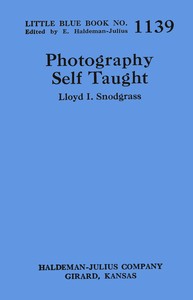
Photography self taught by Lloyd I. Snodgrass
Let's set the scene: It's 1913. Cameras are bulky, film is finicky, and the idea of 'amateur photography' is still pretty new. Into this world steps Lloyd I. Snodgrass with a mission: to teach anyone with curiosity and a few dollars for equipment how to master this modern art. Photography Self Taught is exactly what it says on the tin—a complete course between two covers.
The Story
There isn't a plot in the traditional sense, but there is a clear journey. Snodgrass starts from absolute zero, assuming you know nothing. He walks you through choosing your first camera (with very 1913 options), explaining how film and plates work, and then gets into the real meat: taking the picture. He covers composition, lighting, and all the basics. But the heart of the book is the alchemy of the darkroom. He dedicates huge sections to developing your own negatives and printing your own photos, with incredibly specific instructions on mixing chemicals (some of which you definitely shouldn't try at home today!). The 'story' is your transformation from a confused novice to a confident, self-sufficient photographer.
Why You Should Read It
You should read this not to learn modern photography, but to understand its soul. The joy here is in Snodgrass's voice. He's not a detached expert; he's an excited fellow hobbyist. His tips are practical and earnest. When he explains how to rig up a darkroom in a closet or how to judge exposure without a light meter, you feel the problem-solving passion of early creators. It strips photography down to its physical, chemical basics, which is a wonderful reminder of what's actually happening when you click your phone's shutter. It makes you appreciate the incredible convenience we have now. Plus, the occasional outdated opinion or period-specific advice (like how to photograph your friends on an outing) is downright charming.
Final Verdict
This book is a hidden gem for a specific reader. It's perfect for photography nerds who want to connect with the roots of their craft. It's also great for history lovers and fans of vintage how-to manuals, as it's a direct window into early 20th-century hobbies and mindsets. You'll get some quirky, outdated techniques, but you'll also get the timeless excitement of creating something with your own hands. Just don't expect tips on Instagram aesthetics. Think of it as a conversation with a great-grandfather of photography, full of wisdom, wonder, and a few formulas for chemical baths.
This text is dedicated to the public domain. Feel free to use it for personal or commercial purposes.