1

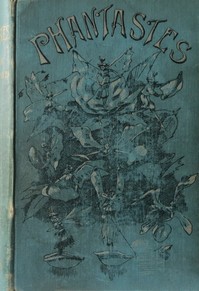
Phantastes: A Faerie Romance for Men and Women — Story, Setting & Ideas
(0 User reviews)
985
Project Gutenberg
2008
Not confirmed
Fantasy fiction
Readers of public-domain and historical texts
Project Gutenberg digital edition
en
Edition facts
Words
73,098
Reading time
318 min
Text sections
29
Phantastes: A Faerie Romance for Men and Women — Story, Setting & Ideas can be approached with a clearer sense of reading commitment from its source measurements: 73,098 words, 5 hr 18 min estimated reading time, and 29 detected text sections.
The text analysis averages about 22.4 words per sentence, while the detected sections provide another way to judge how the source is divided.
Project Gutenberg metadata also associates the work with “Fantasy fiction,” connecting these edition facts with the source record’s subject description.
Source:
Project Gutenberg record #325
George MacDonald's 1858 fantasy follows a young man's dreamlike journey through Fairy Land, where encounters with shadowy doubles, singing trees, and a marble woman probe the boundaries of self, desire, and moral growth.
Read the complete public-domain text at its original source.
Read on Project GutenbergFrom its epigraph—a passage from Fletcher's Purple Island about shapes deriving from a fount—Phantastes announces itself as a work of transformation. The preface by Greville MacDonald, written for the 1905 edition, reveals that the author's son destroyed an earlier unauthorized illustrated edition, underscoring how integral visual interpretation was to the book's reception. The novel opens with a young man named Anodos (Greek for "ascent" or "path upward") who, on his twenty-first birthday, inherits a key that opens a mysterious desk drawer, releasing a tiny woman who leads him into Fairy Land. The narrative voice shifts fluidly between first-person confession and lyrical description, often breaking into song or philosophical reflection.
A Romance Framed by Dreams and Allegory
The subtitle A Faerie Romance for Men and Women signals a deliberate departure from children's fairy tales. MacDonald's Fairy Land is not a realm of simple enchantment but a psychological landscape where the protagonist's inner conflicts take physical form. Early in the narrative, Anodos encounters a shadow that detaches itself from him and begins to act independently, a motif that recurs throughout the text. The shadow is described as "a dark, shapeless thing" that seems to embody his selfishness and pride. This doubling device anticipates later fantasy treatments of the doppelgänger, but MacDonald uses it to explore moral failure rather than horror. The prose itself shifts register: passages of ornate description alternate with abrupt, almost dreamlike transitions, as when Anodos suddenly finds himself in a forest without explanation. Readers should attend to these shifts as clues to the work's internal logic, which is associative rather than causal.
The Marble Lady and the Limits of Desire
One of the most sustained episodes in the excerpts involves a young man named Cosmo, who falls in love with a lady who appears nightly in a magic mirror. This embedded narrative, told within Anodos's journey, mirrors the larger theme of unattainable beauty. Cosmo's obsession is rendered in precise physical detail: the lady's "burning face," the diamonds that "flashed all the colours of a rainbow of lightnings," and his longing to kiss her foot. The passage is notable for its psychological acuity—Cosmo's realization that "passion is never content" and his suspicion that she has a lover elsewhere. The lady's eventual disappearance triggers a physical decline: "He cared for nothing. The sky, with the great sun in it, was to him a heartless, burning desert." This episode functions as a cautionary tale about projection and possession, themes that resonate with Anodos's own encounters with female figures who are both alluring and elusive. The mirror motif also connects to the novel's interest in perception and self-deception.
Songs, Poems, and Interpolated Voices
Throughout the excerpts, characters break into verse. A fairy sings about a "little white lady" and a knight; later, a voice from a beech tree delivers a poem on the transience of beauty. These songs are not decorative but integral to the narrative's meaning. They often comment on the action or provide oblique moral instruction. For instance, the beech tree's song includes the line "Who lives, he dies; who dies, he is alive," a paradox that echoes Christian mystical thought and anticipates the novel's resolution. The inclusion of a German epigraph from Novalis—about tales that are "like a dream-image without connection"—suggests MacDonald's debt to Romantic theories of the fragmentary and the suggestive. Readers should treat these poetic interludes as compressed statements of theme, not as digressions. The novel's structure, with its abrupt shifts between prose and verse, mirrors the "musical fantasy" that Novalis describes, and rewards attention to recurring images such as water, trees, and light.
The Editor's Hand: Greville MacDonald's Preface
The 1905 edition includes a preface by the author's son, Greville MacDonald, which offers a rare glimpse into the book's publication history. He states that his reasons for the new edition are three: to rescue the work from an "unsuitably" illustrated earlier edition (which he bought and destroyed), to pay tribute to his father, and to make the book more widely known. He praises Phantastes as his father's first prose work, one that "rings with the dominant chord of his life's purpose and work." This preface, written nearly fifty years after the original publication, frames the novel as a foundational text in MacDonald's career. It also highlights the collaboration with illustrator Arthur Hughes, whom Greville calls "the only living artist capable of portraying the spirit of Phantastes." While the illustrations are not included in this digital edition, the preface reminds readers that the visual dimension was considered essential to the work's effect. The editor's voice—protective, reverent, and personal—shapes how the romance is presented.
Because Phantastes proceeds by association rather than linear plot, first-time readers may find it helpful to treat each chapter as a separate episode, noting recurring symbols (shadows, mirrors, trees, female figures) without forcing a single allegorical meaning. The novel rewards rereading: what seems arbitrary on first encounter often reveals pattern on a second pass. Pay particular attention to the songs and poems, which frequently crystallize the emotional or moral stakes of the surrounding prose.
That afternoon the rain blurred the window, and I lost myself in Anodos’s shadow-doubles and the marble woman’s quiet sorrow. Afterwards, I sat with the feeling of thresholds barely crossed, of woods that breathe. Then my hand drifted to The Wood Beyond the World — Reading Companion, which held that same ache of longing beneath strange leaves.
There are no reviews for this eBook.
There are no comments for this eBook.
Reader reflection
How did this book work for you?
Your answers remain private and are stored only in this browser.
Your progress
0
/
10
2
Did this book hold your interest?
3
Would you encourage someone else to read it?
4
How easy was the book to follow?
5
How useful were the ideas in this book?
6
Which part made the strongest impression?
7
Did any part of the book stay with you emotionally?
8
Did you relate to its people, ideas, or situations?
9
What changed or sharpened your thinking?
10