1

The Story of the Glittering Plain Which Has Been Also Called the Land of Living Men or the Acre of the Undying — Context and Discussion
(0 User reviews)
317
Project Gutenberg
2001
Not confirmed
Fantasy fiction, English
Readers of public-domain and historical texts
Project Gutenberg digital edition
en
Edition facts
Words
50,752
Reading time
221 min
Text sections
4
The Story of the Glittering Plain Which Has Been Also Called the Land of Living Men or the Acre of the Undying — Context and Discussion can be approached with a clearer sense of reading commitment from its source measurements: 50,752 words, 3 hr 41 min estimated reading time, and 4 detected text sections.
The text analysis averages about 28.5 words per sentence, while the detected sections provide another way to judge how the source is divided.
Project Gutenberg metadata also associates the work with “Fantasy fiction, English,” connecting these edition facts with the source record’s subject description.
Source:
Project Gutenberg record #2565
William Morris's prose romance follows Hallblithe's quest for his betrothed, the Hostage, across a deceptive paradise. The opening, middle, and later excerpts reveal a pattern of courteous encounters, repetitive questioning, and a growing tension between the hero's longing for home and the land's unchanging happiness.
Read the complete public-domain text at its original source.
Read on Project GutenbergThe story begins with a formal, almost ritualistic introduction of Hallblithe, a young man of the House of the Raven, who is betrothed to the Hostage of the House of the Rose. The opening scene—Hallblithe smoothing an ash stave for his spear before the porch—establishes a world of deliberate, crafted detail. Three weary riders arrive, their horses a-sweat and spurs bloody, seeking the Land of the Glittering Plain. The oldest elder speaks in a high piping voice, and Hallblithe responds with a courteous offer of hospitality. This exchange sets a tone of archaic courtesy and hints at a quest that will test the hero's resolve.
A Hero Introduced by Kindred and Custom
The opening chapter grounds Hallblithe in a specific social order: he is of the House of the Raven, his beloved of the House of the Rose, and their marriage is sanctioned by kindred. The narrative voice is measured, using phrases like “it has been told” and “it was right and due.” The description of Hallblithe as “fair, strong, and not untried in battle” is typical of romance heroes, but the focus on his domestic task—smoothing a spear stave—gives a sense of everyday readiness. The three riders are not a war-band but a strange embassy: two old men and a drooping, dark figure. Their question about the Glittering Plain immediately introduces the central mystery. Readers should note how Morris uses repetition of place-names and titles to create a legendary atmosphere.
The Quest Pattern: Repetition and Weariness
By the later excerpts, Hallblithe has spent six moons searching the Glittering Plain. The narrative emphasizes the repetitive nature of his quest: he goes “into every house of folk” and asks his question, only to receive one of two answers—either the woman does not exist, or she is a sorrowful figure looking at a book. The simile comparing him to a heron quartering a flooded meadow underscores methodical, almost mechanical search. Morris conveys Hallblithe’s growing weariness through alternating moods: “Whiles he wearied and longed for death… Whiles he shook off weariness.” The people of the land are “soft and merry” but unable to help, and he longs for the “meadows of the Raven” and the “acres beneath the mountains of Cleveland by the Sea.” This contrast between the perfect land and the hero’s dissatisfaction is a key tension.
The King’s Deceptive Hospitality
In Chapter XV, Hallblithe confronts the King of the Glittering Plain. The King sits in his pavilion door, smiling, and offers a vision of the land’s peace and plenty. His speech is seductive: “Without is battle and famine… within it is plenty and peace.” Yet Hallblithe insists on leaving, and the King’s face changes though he still smiles. The King claims he hinders no departure, but his words carry a threat: “No hand will be raised against thee; there is no weapon in all the land, save the deedless sword by my side.” The phrase “deedless sword” is striking—it suggests a weapon that has never been used, reinforcing the land’s unnatural stillness. Hallblithe’s demand for his troth-plight maiden remains unmet, and the King’s offer of “a joy” is vague. Readers should watch how the King’s courtesy masks a deeper obstruction.
Visions of Home Amidst an Unchanging Land
Throughout the excerpts, Hallblithe’s memories of his homeland are vivid and sensory. In the middle excerpt, he recalls “the house of his fathers and the men of the spear and the plough.” Later, as he approaches the King, he has a vision of the kindred yoking oxen, the plough drawing furrows, haze around elm-trees, and smoke rising straight from the roof. These details are concrete and domestic, contrasting with the abstract perfection of the Glittering Plain. The vision comes “clearly upon me amidst the falseness of this unchanging land,” suggesting that the land’s stasis is a form of deceit. Morris uses these glimpses to anchor Hallblithe’s identity and motivation. The reader should note that the land’s happiness is described as “unchanging,” which for a questing hero becomes a prison.
These excerpts reveal a narrative built on formal dialogue, repetitive structure, and a hero whose determination is tested by a land that offers everything except what he seeks. The Glittering Plain is not a simple paradise but a realm where the hero’s own desires become a source of conflict. Readers attentive to the shifts between Hallblithe’s courteous speech and his inner weariness will find a story that questions the value of a perfect, static world. The quest remains unresolved in these passages, leaving the outcome open.
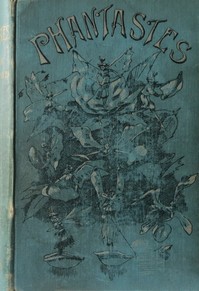
That damp afternoon, Hallblithe’s longing for his own shore lingered long after I closed the book. The Acre’s too-perfect peace felt like a held breath. Later, idly, I picked up Phantastes: A Faerie Romance for Men and Women — Story, Setting & Ideas and found the same ache—a hero walking through beauty that whispers of something truer beneath the leaves.
There are no reviews for this eBook.
There are no comments for this eBook.
Reader reflection
Take a moment to reflect on this book
Create a short personal record of your experience with this book.
Your progress
0
/
10
2
How did the book work for you overall?
3
Would you pass this book on to a friend?
4
How easy was the book to follow?
5
How strongly did the book affect you emotionally?
6
How clearly were the main ideas presented?
7
Could you see yourself revisiting this book?
8
How would you describe its reading pace?
9
What changed or sharpened your thinking?
10