1

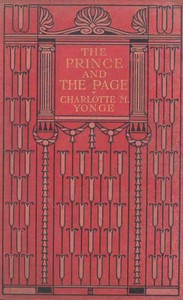
The Prince and the Page: A Story of the Last Crusade — Reading Notes
(0 User reviews)
257
Project Gutenberg
2003
Not confirmed
Crusades -- Eighth, 1270 -- Fiction
Readers of public-domain and historical texts
Project Gutenberg digital edition
en
Edition facts
Words
70,606
Reading time
307 min
Text sections
6
The Prince and the Page: A Story of the Last Crusade — Reading Notes can be approached with a clearer sense of reading commitment from its source measurements: 70,606 words, 5 hr 7 min estimated reading time, and 6 detected text sections.
The text analysis averages about 22.4 words per sentence, while the detected sections provide another way to judge how the source is divided.
Project Gutenberg metadata also associates the work with “Crusades -- Eighth, 1270 -- Fiction,” connecting these edition facts with the source record’s subject description.
Source:
Project Gutenberg record #3696
Charlotte M. Yonge's historical romance centers on Richard de Montfort, a member of the proscribed Montfort family, accused of complicity in the murder of Prince Henry of Almayne during the Eighth Crusade. The excerpt reveals tensions of loyalty, identity, and justice through dialogue and internal conflict.
Read the complete public-domain text at its original source.
Read on Project GutenbergThe excerpt opens with a charged exchange between Richard de Montfort and the boy John, where accusations of treason and murder surface. John warns Richard to flee, believing him to be a traitor Montfort, but Richard insists on staying to prove his innocence. The dialogue reveals a web of suspicion: Richard is a Montfort, and a letter he wrote is seen as evidence of conspiracy. The murder of Prince Henry of Almayne—stabbed in a cathedral during the elevation of the Host—is described with visceral detail, linking the crime to the Montforts' vengeance for their father's death at Evesham.
Yonge uses the setting of a crusader camp to heighten the stakes. Richard's internal reflection—'nothing could be before the member of a proscribed family, but failure, suspicion, and ruin'—underscores the inescapable weight of family identity. The scene is built on contrasts: the boy's loyalty versus the archers' menace, Richard's resolve versus the prince's marble-like sternness.
Family Identity as a Trap
The excerpt repeatedly shows that being a Montfort is itself a liability, regardless of personal actions. Richard declares, 'If I were a hundred Montforts, what has that to do with it?' yet the accusation hinges on his surname. The boy John initially assumes Richard's innocence because he cannot be 'one of the traitor Montforts,' but later confirms the name is enough to implicate him. Yonge emphasizes this through Richard's realization that his family's past—the murder of Henry of Almayne by his brothers Guy and Simon—taints him by association. The text does not reveal whether Richard is guilty, but the pattern of suspicion is clear: identity precedes evidence.
Voice and Silence in the Accusation
Dialogue drives the tension. John speaks in breathless, fragmented sentences ('O Richard—at the elevation of the Host!'), while Richard responds with measured defiance. The archers appear silently, their presence announced in 'brief gruff tones.' Prince Edward's face is 'like a rigid marble statue,' and Edmund weeps 'bitterly' yet shows 'fierce indignation.' These contrasts in voice—panicked, calm, silent, sorrowful—create a layered atmosphere. Richard's own internal voice is resigned: he 'took up his resolution though with a certain stunned sense.' Yonge uses these vocal shifts to convey the pressure of public judgment without explicit narration.
The Letter as a Tangible Clue
The letter Richard wrote becomes a central piece of evidence. John saw him write it, and it is interpreted as a warning to the Montfort brothers to intercept Prince Henry. Richard admits writing the letter but denies its purpose: 'I am not therefore leagued with traitors or murderers.' The excerpt does not reveal the letter's content, leaving the reader to weigh Richard's protest against the circumstantial evidence. Yonge uses this ambiguity to explore how actions can be misread. The letter is a physical object that ties Richard to the crime, yet his refusal to flee suggests innocence—or stubborn pride. This unresolved tension drives the narrative forward.
Readers should attend to how Yonge balances historical detail with personal drama. The preface mentions sources like household accounts and Carte's history, but the excerpt focuses on character reactions rather than events. Notice how the murder is reported secondhand, through John's breathless account, keeping the focus on Richard's predicament. The story does not resolve the accusation here; instead, it builds a world where family name and a single letter can determine fate.
Reading Richard’s hushed dread of his own inheritance—that blood guilt which clings like weather—I remembered sitting with The Scottish Chiefs under a slow fan. Wallace’s solitude felt less heroic there, more like the same weight: loyalty carved into a man until he barely recognises himself. The Scottish Chiefs — Story, Setting & Ideas lingers with that quiet ache, the way old oaths outlive their speakers.
There are no reviews for this eBook.
There are no comments for this eBook.
Reader reflection
Record your reading impressions
A brief reflection can help important ideas stay with you longer.
Your progress
0
/
10
2
Did this book hold your interest?
3
Would you encourage someone else to read it?
4
Did the language feel accessible?
5
How clearly were the main ideas presented?
6
How useful were the ideas in this book?
7
How distinctive were its ideas or approach?
8
How strong was your personal connection to the text?
9
What did this book teach you most?
10