1

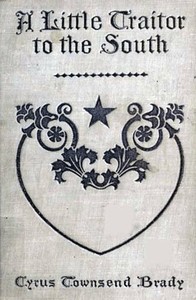
A Little Traitor to the South A War Time Comedy with a Tragic Interlude — A Reader’s Guide
(0 User reviews)
2105
Project Gutenberg
2007
Not confirmed
United States -- History -- Civil War, 1861-1865 -- Fiction
Readers of public-domain and historical texts
Project Gutenberg digital edition
en
Edition facts
Words
28,267
Reading time
123 min
Text sections
4
The catalog record for A Little Traitor to the South A War Time Comedy with a Tragic Interlude — A Reader’s Guide provides practical reading context through 28,267 words, 2 hr 3 min estimated reading time, and 4 detected text sections.
The text analysis averages about 13.4 words per sentence, while the detected sections provide another way to judge how the source is divided.
Project Gutenberg metadata also associates the work with “United States -- History -- Civil War, 1861-1865 -- Fiction,” connecting these edition facts with the source record’s subject description.
Source:
Project Gutenberg record #21681
An editorial note examining how Cyrus Townsend Brady uses diction, dialogue, and description to create a war-time comedy with a tragic interlude, focusing on the authorial choices in the excerpts.
Read the complete public-domain text at its original source.
Read on Project GutenbergCyrus Townsend Brady’s subtitle, “A War Time Comedy with a Tragic Interlude,” signals a deliberate tonal shift that the excerpts bear out. The opening line, “Miss Fanny Glen detested a masterful man,” establishes a comic register through its ironic contrast with the ensuing action. The narrative voice often employs a light, almost theatrical quality in dialogue and internal monologue, yet the preface grounds the story in historical fact, naming the crew of the Confederate torpedo boat David and their fate. This tension between comedy and documented tragedy is the work’s central authorial choice.
Diction and the Comic Register
The excerpts reveal a narrator who favors balanced, slightly formal phrasing that undercuts dramatic moments with a wry detachment. Phrases such as “a little war-time comedy of the affections” and the repeated use of “gallant” and “heroism” in the preface set a tone of ironic admiration. In the love scenes, diction shifts between romantic intensity and self-conscious exaggeration: Sempland’s internal turmoil is rendered in exclamatory fragments (“Great God! was he going mad?”), while Fanny’s reflections use parallel structure (“she knew that she loved him… she knew that she loved him”). This controlled diction keeps the comedy from descending into melodrama, even when the plot turns tragic.
Dialogue as a Tool of Character and Conflict
Dialogue in the excerpts is sparse but pointed. The preface’s direct address to the reader (“These names should be written in letters of gold”) establishes an authorial voice that intrudes to frame the story. In the narrative proper, characters speak in short, emotionally charged bursts. Sempland’s questions to himself (“Was she indeed what he called him, a heartless coquette?”) blur the line between spoken and internal dialogue, revealing his obsessive doubt. Fanny’s few spoken lines are implied rather than quoted, emphasizing her silence as a strategic choice. The contrast between the voluble, self-dramatizing Sempland and the silent, enigmatic Fanny drives the comedy of misunderstanding.
Description and the Weight of Setting
Brady uses description to anchor the emotional stakes in physical space. Sempland’s pacing is repeatedly tied to windows and the sea: “stopping at the windows to stare out into the dark in the direction of the sea—where he should have been.” The wharf, the strong room, and the dark harbor become symbolic stages for his failure. Fanny’s faint on the wharf is described without interior access, leaving her motives opaque. The description of the David as a “death trap” in the preface is echoed in the narrative’s focus on muffled explosions and distant cannon fire. Setting thus functions as a silent character, amplifying the comedy of missed connections and the tragedy of historical inevitability.
Recurring Details and Structural Echoes
Several details recur to reinforce the work’s themes. The kiss—first seized, then remembered—appears in both Sempland’s and Fanny’s thoughts, creating a structural echo that underscores their mutual but unspoken love. The name “Lacy” functions as a repeated trigger for jealousy and suspicion. The motif of the clock or time is implicit in Sempland’s failure to appear on the wharf “in time.” The preface’s list of historical names (Dixon, Carlson, Becker, etc.) is mirrored in the narrative’s focus on individual honor and sacrifice. These repetitions are not accidental; they form a deliberate pattern that binds the comic love story to the tragic historical interlude.
Readers attentive to Brady’s authorial choices will notice how the comedy depends on withheld information and the tragedy on historical fact. The excerpts offer only a partial view of the plot, but they reveal a writer carefully balancing tone, using diction to modulate between irony and earnestness, dialogue to expose character, and description to ground emotion in place. The work rewards close attention to these craft decisions rather than a search for simple resolution.
I keep thinking how A Little Traitor to the South holds its sorrow behind laughter, the way my grandfather told stories about the war—jokes first, then a long pause. That pause lived in another book once, when She — Text and Context made me sit with its silences. Both books feel like old photographs where someone’s eyes are blurred, and you know why.
There are no reviews for this eBook.
There are no comments for this eBook.
Reader reflection
Take a moment to reflect on this book
Create a short personal record of your experience with this book.
Your progress
0
/
10
2
Was reading this book enjoyable?
3
Would you recommend this book to another reader?
4
What was the reading difficulty like?
5
Could you apply anything you learned?
6
How well did it match your expectations?
7
How strong was your personal connection to the text?
8
Could you follow the author’s main argument?
9
What did this book teach you most?
10