1

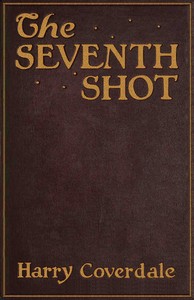
The seventh shot — Inside the Classic
(0 User reviews)
400
Project Gutenberg
2025
Not confirmed
New York (N.Y.) -- Fiction; Detective and mystery stories; Murder -- Investigation -- Fiction; Theater -- Fiction; Actors -- Fiction
Readers of public-domain and historical texts
Project Gutenberg digital edition
en
Edition facts
Words
73,174
Reading time
319 min
Text sections
38
The catalog record for The seventh shot — Inside the Classic provides practical reading context through 73,174 words, 5 hr 19 min estimated reading time, and 38 detected text sections.
The text analysis averages about 14.3 words per sentence, while the detected sections provide another way to judge how the source is divided.
Project Gutenberg metadata also associates the work with “New York (N.Y.) -- Fiction,” connecting these edition facts with the source record’s subject description.
Source:
Project Gutenberg record #76659
Herman Landon's 1924 detective novel set in New York's theater district, where a murder during rehearsals is investigated by Jim Barrison. The narrative shifts between brisk, slang-filled dialogue and methodical clue-gathering, with a focus on timing, damp coats, and the titular seventh shot.
Read the complete public-domain text at its original source.
Read on Project GutenbergThe seventh shot opens on a sweltering August noon on Broadway, where the Rialto teems with actors, chorus girls, and stage managers caught in the frantic pre-season rush. The prose moves in short, staccato bursts—'Chorus girls, half dead from three hours of ceaseless dancing, came hurrying from stage doors'—before settling into the clipped, slang-laden exchanges that define the detective Jim Barrison and his sidekick Tony. The murder of actor Mortimer during rehearsals is not lingered upon; instead, the narrative immediately pivots to the business of detection: damp evening coats, contradictory alibis, and the careful reconstruction of a crime scene. Landon's voice is brisk, almost journalistic, favoring concrete details over atmosphere.
The Rhythm of the Rialto
The novel's opening pages establish a distinctive tempo through their handling of setting and time. The first chapter, 'Brook Trout For Two,' uses the heat and bustle of Broadway not as mere backdrop but as a rhythmic device: the 'steady stream of humanity,' the 'clanging cars,' and the 'swirling' crowds create a percussive, almost mechanical pulse. This pace carries into the dialogue, where characters trade rapid-fire slang—'the whole cheese,' 'an also ran,' 'the one best bet'—that mirrors the nervous energy of theater people. Landon rarely pauses for descriptive set pieces; instead, he embeds sensory details within action, as when Barrison notes that a suspect's evening coat 'is damp this morning, and it didn't begin to rain till after midnight.' The rhythm of the Rialto—hurried, clipped, and performative—becomes the novel's underlying meter.
Barrison's Method: Observation Over Intuition
Jim Barrison, the detective, operates through a process of meticulous, almost mundane observation rather than leaps of intuition. In the excerpts, he instructs Tony to 'find out who saw Miss Legaye come in last night; what time it was, whether she seemed excited, and—what she wore!' The emphasis on the damp coat—a physical detail that could be explained away but is 'not, strictly speaking, evidence at all'—reveals a mind attuned to anomalies in routine. Landon contrasts this with the theatricality of the suspects: the playwright Carlton speaks in exaggerated metaphors ('Am I a racing car or a flivver?'), while Barrison replies in flat, literal statements. The narrative voice itself shifts between these registers, moving from the flamboyant dialogue of the theater crowd to Barrison's terse, factual summaries. This alternation creates a structural tension between performance and reality.
The Weight of a Single Detail
Landon builds suspense through the accumulation of small, seemingly trivial facts. The damp coat, the timing of rain, the 'little woman back there' who was 'genuinely shocked'—these details are presented without emphasis, then revisited as the investigation narrows. The chapter titles themselves ('Blind Trails,' 'The Lost Clew') signal a narrative that values process over revelation. In the excerpts, Barrison's hunger and fatigue are noted alongside his deductions, grounding the detective in physical reality. The prose rarely rises to melodrama; even the murder is referred to obliquely as 'that poor guy going out like that.' This restraint gives weight to each new piece of information, as when Carlton mentions 'priceless advertising' from the killing—a cynical note that undercuts the gravity of the crime. The reader is left to weigh evidence alongside Barrison, without authorial nudging.
Readers attentive to narrative pace will notice how Landon uses chapter breaks and shifts in dialogue tempo to control information flow. The novel's 38 sections allow for frequent scene changes, each advancing the investigation by a single clue or contradiction. Pay particular attention to moments when the dialogue slows—these often precede a revelation. The seventh shot of the title is not explained in the excerpts, but its numerical significance likely echoes the methodical counting of details that defines Barrison's approach.
Reading about Barrison timing those shots against the rain-soaked coats, I remembered my grandfather’s old theater program, dog-eared and smelling of dust. He used to tell me how the seventh bullet never felt accidental. That same quiet dread crept through me once with Doctor Grimshawe's Secret — a Romance — Reading Companion, where every clue seemed to hide another hour of someone’s life.
There are no reviews for this eBook.
There are no comments for this eBook.
Reader reflection
Take a moment to reflect on this book
Create a short personal record of your experience with this book.
Your progress
0
/
10
2
Was reading this book enjoyable?
3
Would you encourage someone else to read it?
4
What was the reading difficulty like?
5
Was the book what you thought it would be?
6
How would you describe its reading pace?
7
How original did the book feel?
8
How personally connected did you feel to the book?
9
What changed or sharpened your thinking?
10